
Understanding the Enemy: What is Smog and Why Punjab?
Now the question becomes…
🤔 “What do these trucks do? Do they just throw water or is there really some special technology behind it?”
Let’s understand in simple words👇
🔹 First task: Fine water mist
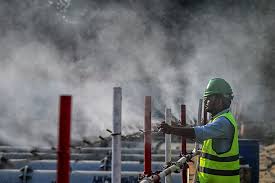
This truck sprays very fine water droplets (mist) into the air from high-pressure nozzles mounted on it.
These droplets stick to particles of dust, dirt, and smoke flying in the air.
The result?
Those particles fall to the ground, and the air feels clear and cool for a while.
🔹 Second job:
Pulling in and cleaning the air
Some modern trucks also have a filter system.
They pull in polluted air, pass it through filters, and then push clean air back out.
It’s like a giant vacuum cleaner working! 😄
🔹 Third task: Reducing dust on the roads
When these trucks spray water, the dust that has settled on the roads also settles,
which also reduces the pollution caused by the movement of vehicles.
💡 An interesting fact:
An Anti-Smog Truck usually has a water tank of 2000 to 5000 liters,
which can spray continuously for several hours.
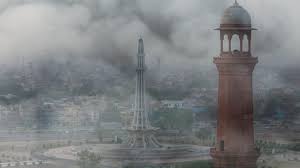
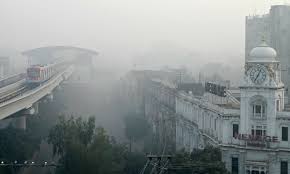
Before appreciating the solution, we must understand the problem. Smog is not mere fog. It’s a type of intense air pollution where ground-level ozone mingles with particulate matter (PM2.5 and PM10). And nitrogen oxides, volatile organic compounds, and other chemicals. Punjab’s geographic and economic landscape makes it particularly vulnerable:
- Agricultural Aftermath: Making them free ensures that no one deprives these services of cost constraints.
- Urban Pollution: Rapid urbanization and a surge in vehicles, many with outdated emission standards, contribute significantly to nitrogen oxide levels.
- Industrial Emissions: Unchecked emissions from factories and brick kilns, often using low-quality fuel, add to the toxic mix.
- Meteorological Conditions: Temperature inversion during winter months acts like a lid, trapping these pollutants close to the ground, creating the dense smog layer.
The health implications are severe, ranging from aggravated asthma, bronchitis, and eye infections to increased risks of heart attacks, strokes, and lung cancer.
The Cavalry Arrives: What is an Anti-Smog Truck?
An Anti-Smog Truck is a mobile air purification system, a technological innovation designed to mitigate pollution at the local level. While it’s not a silver bullet that can solve the smog crisis single-handedly. It is a powerful tool for targeted intervention.
These are not ordinary water tankers. Specialized vehicles equipped with high-capacity mist cannons spray a fine mist of water into the air.. But here’s the science that makes it effective:
- The Mechanism: The cannons atomize water into ultra-fine droplets, many of which are so small they measure in microns. These droplets act as magnets for the even smaller particulate matter (PM2.5) floating in the air.
- The Process: As the smog ejected the water droplets, they collided with and absorbed the pollutant particles.. The combined weight of the water and the particles makes them too heavy to remain airborne, causing them to fall to the ground harmlessly. This process is effectively a localized “artificial rain” or scrubbing action.
- The Technology: Modern anti-smog trucks can spray mist up to 50-70 meters high and cover a wide area. As the smog ejected the water droplets, they collided with and absorbed the pollutant particles.
The Punjab Government’s Deployments: A Multi-Pronged Strategy
The Government of Punjab, through its Environment Protection Department (EPD) and allied departments, has deployed these trucks strategically across the province’s smog epicenters, particularly in Lahore, Gujranwala, and Faisalabad.
The strategy is multi-faceted:
- Hotspot Targeting: The trucks are deployed in known high-pollution zones—major traffic intersections (like Liberty Roundabout or Kalma Chowk), industrial areas, and construction sites. This ensures the technology is used where it is needed most.
- Round-the-Clock Shifts: During peak smog season (typically October to January), these trucks operate in shifts to maintain a constant presence, especially during early morning and evening hours when smog density is often highest.
- Complementary Measure: The government rightly positions the anti-smog trucks as part of a larger action plan. This includes:
- Enforcement: Strict crackdowns on smoke-emitting vehicles, illegal brick kilns, and industrial polluters.
- Awareness: Campaigns to discourage crop residue burning and promote public transport.
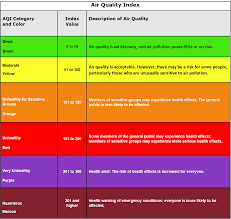
- Monitoring: Using air quality index (AQI) monitors to make data-driven decisions on deployments.
Impact and Public Perception: A Breath of Fresh Air?
The effectiveness of anti-smog trucks is a topic of discussion among environmentalists.
- The Positives: There is a consensus that these trucks provide immediate, localized relief. In the specific areas where they operate, residents and commuters report a noticeable reduction in eye irritation and throat discomfort. They use purified water to prevent adding any impurities back into the air and design it to optimize water usage to avoid wastage.
- The Limitations: Critics rightly argue that this is a palliative measure. It treats the symptom (polluted air in a specific spot) but not the root cause (the emission of pollutants). The effect is temporary and hyper-localized; once the truck moves on, pollution can quickly build up again.
The key takeaway is that we should view the Anti-Smog Truck as an emergency response tool, much like an ambulance.. It’s crucial for providing immediate care, but it doesn’t replace the need for preventive healthcare—which, in this case, is systemic change in agriculture, transport, and industry.
The Road Ahead: Beyond the Mist
The Punjab government’s investment in anti-smog trucks is a commendable and necessary first step. It shows a willingness to adopt innovative technology. Sustained systemic efforts will win the long-term battle.
- Agricultural Reformation: Promoting and subsidizing Happy Seeders and other machinery that can manage crop residue without burning is paramount. This requires cross-border dialogue and farmer education.
- Green Transportation: Accelerating the transition to Euro 5 fuel, promoting electric vehicles (EVs), and investing in mass transit systems like electric buses and the Metro are non-negotiable for cutting urban emissions.
- Industrial Accountability: Mandating and enforcing the installation of emissions control systems like scrubbers in all industries and converting brick kilns to zigzag technology to drastically reduce their footprint.
- Afforestation: Aggressive tree plantation drives in and around urban centers. Trees are nature’s own air filters and their role cannot be overstated.
Conclusion: A Symbol of Hope and a Call for More
The Anti-Smog Truck of the Government of Punjab is more than just a vehicle; it is a mobile statement. It represents a shift from passive complaint to active intervention. It is a testament to the fact that the government is listening and is willing to invest in the well-being of its citizens.
While we applaud this initiative, we must also view it as a starting point. The mist from the cannons clears the air for a moment, offering a glimpse of the blue sky that is every Punjabi’s right. It is now the collective responsibility of the government, industries, farmers, and every citizen to work together to ensure that glimpse becomes a permanent reality. The trucks are on the frontline, but a holistic, unwavering commitment to a greener, cleaner Punjab will win the war on smog.https://share.google/xPiOzITsHud1Y80VP
Read more: What is Smog and Why Punjab? Anti-Smog Truck In Lahore