
Job Opportunity of (BS-17) Pakistani Civil Services (CSS). The Crown Jewel of Pakistan Civil Services CSS.
The Central Superior Services exam is conducted annually by the Federal Public Service Commission (FPSC).
It is the primary recruitment method for the country’s elite Group of Pakistan, which includes prestigious services like:
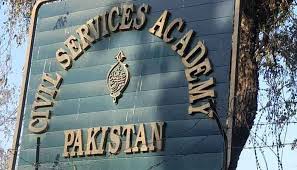
In the landscape of Pakistani careers, one examination stands as the ultimate test of intellect, perseverance, and patriotism: the Central Superior Services (CSS) exam. More than just a test, it is a gateway to shaping the nation’s destiny, a rigorous process that filters out the most capable minds to lead and administer the country. For thousands of aspirants each year, the CSS exam represents a dream—a chance to serve at the highest echelons of the federal government and leave an indelible mark on society.
Exploring its Significance
This blog post delves deep into the world of CSS in Pakistan, exploring its significance, the intricate preparation process, the challenges faced by aspirants, and the profound impact successful candidates can have.
The Crown Jewel of Pakistan Civil Services CSS
Pakistan Administrative Service (PAS):
The most recent and current syllabus is from 2023, and it is expected to remain almost identical for the 2024, 2025, and likely the 2026 examinations. Any minor updates are usually announced by the FPSC in their annual Advertisement/Notice.
Here is a comprehensive breakdown of the current CSS syllabus, which you can confidently use to begin your preparation for the 2026 exam.
Overview of the CSS Examination
The CSS exam consists of two parts:
- Compulsory Subjects (600 marks)
- Optional Subjects (600 marks from a group of subjects)
Total Marks: 1200
1. Compulsory Subjects (All candidates must take these)
There are 6 compulsory papers, each of 100 marks.
| Subject Code | Subject Name | Key Topics |
|---|---|---|
| 01 | Essay | Candidates are required to write one or more essays on a variety of topics. Marks are awarded for language, coherence, argument, and knowledge. |
| 02 | English & Composition | This includes correct subject, correct use of grammar, correct use of sentences, vocabulary, idiom writing. |
| 03 | General Science & Ability | Part I General science includes medical sciences, botanical sciences, and computer science. Part II (General Ability): Basic Arithmetic, Algebra, Geometry, Logical Reasoning & Analytical Ability, and Problem-Solving. |
| 04 | Current Affairs | Major ongoing international and domestic issues, Pakistan’s foreign relations, internal security challenges, economic trends, and significant global events. |
| 05 | Pakistan Affairs | Ideological Foundation of Pakistan, Historical Perspective (1857-1947), Post-Independence Era (1947-present), National Integration, Social Issues, and Culture. |
| 06 | Islamic Studies (OR) Comparative Study of Major Religions (For Non-Muslims) | For Muslims (Islamic Studies): Fundamental beliefs, Quran & Hadith, Islamic History & Culture, Islamic Social System, and the Constitution of Pakistan related to Islam. For Non-Muslims: Basic teachings, founders, and history of major religions (Islam, Christianity, Judaism, Buddhism, Hinduism, etc.). |
2. Optional Subjects (Candidates choose a combination)
Candidates must select 6 optional subjects from a wide range of groups, but with specific rules:
- You cannot choose more than one subject from a single group (with a few exceptions).
- Each optional subject is of 100 marks.
Here are the groups and the subjects within them (this is a sample of the most popular ones):
| Group | Subject Name |
|---|---|
| Group A (Languages) | Arabic, Bengali, English Literature, French, German, Italian, Latin, Persian, Portuguese, Pushto, Russian, Sindhi, Spanish, Turkish, Urdu, Chinese, Japanese, Korean. |
| Group B (Science Subjects) | All science subjects and engineering are included. |
| Group C (Humanities) | Accountancy & Auditing, Anthropology, Business Administration, Economics, Geography, History of Pakistan & India, International Relations, Islamic History & Culture, Law, Philosophy, Political Science, Psychology, Public Administration, Sociology, Governance & Public Policies. |
| Group D (All Other Subjects) | This includes journalism, mass communication, all subjects, science, mathematics. |
Popular Combinations often include subjects from Group C (Humanities) such as:
- International Relations
- Political Science
- History of Pakistan & India
- Public Administration
- Sociology
- Gender Studies
- Criminology
Important Notes for 2026 Aspirants
- No Official 2026 Syllabus Yet: Always refer to the official FPSC website (www.fpsc.gov.pk) for the final and official syllabus announcement. This typically happens when the annual advertisement is published (usually around September-October for the following year’s exam).
- Focus on Current Affairs: The “Current Affairs” paper is dynamic. For 2026, you will need to focus on events from approximately 2023 onwards.
- Recommended Books: The FPSC often recommends a list of books for each subject. These are listed in the syllabus notification and are crucial for targeted preparation.
- Pattern is Fixed: The exam pattern (1200 marks, 12 papers) is a long-standing policy and is extremely unlikely to change for 2026.
How to Start Preparing for CSS 2026
- Analyze the Current Syllabus: Use the 2023 syllabus as your blueprint. It is 99.9% accurate for future exams.
- Choose Your Optional Subjects Wisely: Base your choice on your academic background, interest, and the availability of study resources and coaching.
- Build a Reading Habit: Start reading leading English newspapers (Dawn, The News) and magazines (e.g., The Economist for a global perspective) daily.
- Start with Compulsories: Begin your preparation with the compulsory subjects, especially English Essay and Précis, as they require consistent practice.
- Refer to Past Papers: Solving past papers (available on the FPSC website) is the single best way to understand the question style and depth required.
Best of luck with your preparation! Starting early with the right information is the key to success in the CSS exam
Pakistan Administrative Service (PAS):
The backbone of district administration and policy formulation.
Police Service of Pakistan (PSP): Responsible for maintaining law and order.
Foreign Service of Pakistan (FSP): Representing Pakistan’s interests on the global stage.
Pakistan Customs Service & Inland Revenue Service: Managing the nation’s economic borders and revenue generation.
And many others, including Commerce, Military Lands, Information, and more.
The allure of CSS isn’t merely about job security or a respectable salary; it’s about influence, responsibility, and the opportunity to be a direct agent of change. CSS officers are the architects of policy, the implementers of development projects, and the custodians of public trust.
Deconstructing the CSS Exam: A Three-Tiered Gauntlet
The CSS exam is not a single test but a multi-stage selection process designed to assess a candidate’s holistic capabilities.
- The Preliminary Test (Pre-CSS):
Introduced as a screening test, the Pre-CSS is a multiple-choice question (MCQ) exam of 100 marks. It covers general knowledge in areas like Current Affairs, Pakistan Affairs, Islamic Studies, English, and Everyday Science. Passing this test is mandatory to proceed to the main examination. - The Main Examination:
This is the heart of the CSS process, a written exam comprising 12 papers totaling 1200 marks. The subjects are divided into:
Compulsory Subjects (600 marks): These are non-negotiable and test the core knowledge every officer must possess.
Essay:
English (Precis & Composition)
General Knowledge (Pakistan Affairs, Current Affairs, Islamic Studies)
Urdu
Optional Subjects (600 marks): Candidates choose a combination of six subjects from a vast list provided by the FPSC. Popular and strategic choices often include International Relations, Political Science, Gender Studies, Journalism, and Law. The selection of optional subjects is a critical strategic decision that can make or break an aspirant’s score.
- The Psychological Assessment & Viva Voce (Interview):
The final hurdle is the most subjective. Candidates who pass the written exam are called for a psychological test and a rigorous interview before a panel of FPSC members. - The 300-mark interview assesses a candidate’s confidence, communication skills, intellectual depth, personality, and overall suitability for a life in public service.
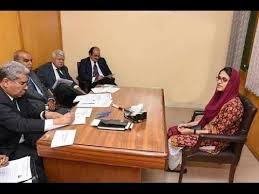
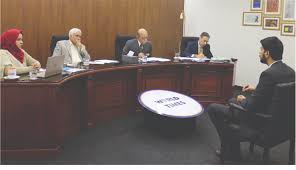
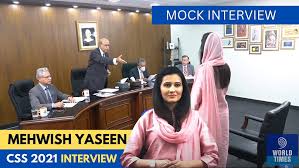
The Crown Jewel of Pakistan Civil Services CSS
The Art and Science of CSS Preparation
Preparing for CSS is a marathon, not a sprint. It typically requires 10 to 12 months of dedicated, structured effort.
Building a Foundation:
It begins with understanding the syllabus thoroughly. Aspirants must move beyond rote learning and develop a deep, analytical understanding of issues. For example, Pakistan Affairs isn’t just about memorizing dates but understanding the socio-political evolution of the nation.
The Power of Reading:
A successful CSS candidate is an avid reader. Daily newspapers like Dawn, The News, and The Express Tribune are essential for Current Affairs. Magazines like The Economist and Foreign Policy provide a global perspective crucial for subjects like International Relations. Standard books on history, Islam, and essay writing form the core of the study material.
Answer Writing Practice:
This is arguably the most crucial skill. The FPSC values clarity, structure, and conciseness. Practicing answers within a strict time limit, developing a compelling introduction and a powerful conclusion, and presenting arguments with logical flow are skills honed through relentless practice.
The Optional Strategy:
Choosing the right optional subjects is a game-changer. Candidates must align their choices with their academic background, interest, and the scoring trends of the subjects.
Unique Challenges for the Pakistani Aspirant
The path to CSS is fraught with challenges specific to the Pakistani context:
CSS Exam Results: Last 4 Years (2020 – 2023)
| Year | CSS Exam Year | Total Candidates Who Appeared | Total Candidates Who Passed | Overall Pass Percentage | Number of Vacancies | Top Position Holder(s) |
|---|---|---|---|---|---|---|
| 2023 | CSS 20221 | 20,500 | 415 | 2.02% | 202 | Muhammad Abdul Saboor (1st Position) |
| 2022 | CSS 2021 | 12,000+ | 393 | ~3.2% | 217 | Dr. Muhammad Usman (1st Position) |
| 2021 | CSS 2020 | 11,500+ | 303 | ~2.6% | 217 | Ammara Aftab (1st Position) |
| 2020 | CSS 2019 | 11,521 | 312 | 2.71% | 217 | Muhammad Saad (1st Position) |
Key Observations and Trends:
- Consistently Low Pass Percentage: The CSS exam is notoriously competitive. The pass percentage has hovered between a very selective 2% to 3.2% over these years, making it one of the toughest competitive exams in the country.
- Increasing Number of Applicants: There has been a significant surge in the number of candidates appearing for the exam, with the 2023 figure (20,500) being the highest in recent history.
- Stagnant Vacancies: The number of available seats (vacancies) has remained relatively constant (mostly 217), which intensifies the competition as more people compete for a similar number of positions.
- Merit List: The results are announce in the form of a “Final Result” or “Merit List,” which includes the roll numbers, names, and allocated service groups (e.g., Pakistan Administrative Service, Police Service of Pakistan, Foreign Service of Pakistan, etc.) of the successful candidates.
Important Note:
- 1 Naming Convention: The exam is name after the year it is conducte, but the results are typically announce the following year. For example, the CSS 2022 exam was held in February 2022, and its result was announced in 2023.
For the most accurate and detailed information, including the complete merit list and service allocations, you should always refer to the official FPSC website: https://www.fpsc.gov.pk/
I hope this table and summary are helpful! Good luck with your preparations if you are a candidate.
Information Overload vs. Quality Resources:
While there is no shortage of “academies” and notes, finding authentic, high-quality, and analytical material can be difficult.
The English Hurdle: For many aspirants from Urdu-medium or non-elite backgrounds, the English paper (Essay and Precis) presents a significant barrier, requiring focused effort on vocabulary and composition.
Societal Pressure: The extended preparation period, often without a job, brings immense psychological and financial pressure from family and society.
The “Academy Culture”: While coaching centers can provide guidance, over-reliance on them can stifle the original thought and analytical ability the FPSC seeks.
Beyond the Exam: The Life of a CSS Officer
Clearing the CSS exam is just the beginning. Successful candidates undergo rigorous training at the Civil Services Academy (CSA) in Lahore, where they are molded into officers. The life that follows is one of immense challenge and reward. Officers are frequently transferred, placed in remote areas, and handed responsibilities that directly affect millions of lives. It is a career that demands integrity, resilience, and an unwavering commitment to public service.
Conclusion: A Call to Serve
The CSS exam in Pakistan is more than a competition for a job; it is a filtering process for national leadership. It seeks individuals who are not just intelligent but also wise, not just knowledgeable but also empathetic. The journey is grueling, demanding every ounce of an aspirant’s dedication and intellect.
For those who dare to embark on this journey, the reward is unparalleled: the privilege to serve the nation and the power to turn a vision of a prosperous, just, and strong Pakistan into a reality. It is a summit worth climbing, for the view from the top is the future of Pakistan itself. Home
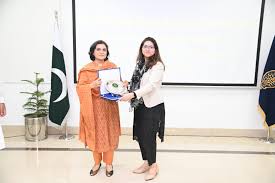
The Life of a CSS Officer
Related Queries:
job, job alert, jobs ,jobs in Faisalabad ,jobs in Pakistan, job portal, jobee, jobs bank, job description, jobs24, job corps, job application, job Punjab gov pk, job clerk, job search websites, job openings near me, job in Pakistan, jobs Sahiwal, jobs in Karachi, job scan, jobs in Lahore, jobzzpk, jobs in Islamabad, jobes24, jobs near me, jobs in Rawalpindi, jobs alert, jobs Punjab gov pk, jobs in Peshawar, job in Karachi, job guru online, job portal Punjab, job bazar, job in Lahore, job bank Canada, job in Islamabad, job bank Pakistan, job hunting