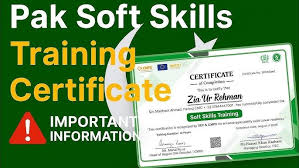
Soft Skill Certificates / Soft Skill Certificate Government of Pakistan for Overseas Jobs
1. The Primary Body: National Vocational & Technical Training Commission (NAVTTC)
NAVTTC is the apex federal body in Pakistan responsible for regulating, facilitating, and providing technical education and vocational training (TVET). They are the main government organization that offers and recognizes skill certifications, including soft skills.
**Key Initiative: ** The Recognized Prior Learning (RPL) program often includes soft skills assessment and certification for workers, especially those aiming for overseas employment.
NAVTTC’s “Overseas Employment Promotional Skills” Programs
Many of NAVTTC’s programs are specifically designed for the international job market. These courses are typically offered through their network of affiliated training institutes across Pakistan (e.g., TEVTA in Punjab, Sindh TEVTA, etc.).
- Common Soft Skills Covered:
- Communication Skills (often with a focus on the language required in the destination country, like Arabic for the Gulf)
- Interview Preparation & Techniques
- Workplace Ethics & Etiquette
- Teamwork and Collaboration
- Problem-Solving and Critical Thinking
- Time Management and Productivity
- Cultural Sensitivity and Adaptation
- Basic IT and Digital Literacy
- CV and Resume Writing
How to Get Certified:
- Visit the NAVTTC Website: Go to the official NAVTTC website (
navttc.gov.pk). - Find an Affiliated Institute: Look for their list of registered training institutes (RIs) in your city or region.
- Check for Courses: Contact the institutes directly to inquire about upcoming batches for “Overseas Employment” or “Soft Skills” training programs.
- Enroll and Train: Enroll in the course, which may be free or offered at a subsidized cost.
- Get Certified: Upon successful completion, you will receive a certificate that is recognized by NAVTTC and, by extension, the Government of Pakistan.
Soft Skill Certificate Government of Pakistan for Overseas Jobs
2. The Overseas Pakistani Foundation (OPF)
While OPF doesn’t issue its own “Soft Skill Certificate,” it plays a crucial role in facilitating overseas employment for Pakistanis.
- Pre-Departure Orientation Training (PDOT): OPF, in collaboration with other agencies, often mandates or provides PDOT for emigrants. This training heavily emphasizes soft skills necessary for survival and success abroad, including:
- Legal rights and responsibilities.
- Cultural norms of the host country.
- Financial management and remittance.
- Basic communication in the local language.
- Certification: Completion of a PDOT program is often a valuable certificate to have in your portfolio when applying for overseas jobs through official channels.
3. Technical Education and Vocational Training Authorities (TEVTAs)
Provincial bodies like Punjab TEVTA and Sindh TEVTA are key partners of NAVTTC. They offer a vast array of skill-specific courses, and soft skills are almost always a mandatory module within any technical trade course aimed at overseas employment (e.g., for electricians, plumbers, welders, nurses).
4. Ministry of Overseas Pakistanis & Human Resource Development
This ministry formulates policy. While it doesn’t directly issue certificates, its initiatives drive the programs run by NAVTTC, OPF, and the Bureau of Emigration & Overseas Employment (BEOE). The BEOE is your go-to for getting your employment contract attested and approved, and they often verify that you have undergone the necessary skill training.
Soft Skills Certificate in Pakistan, specifically tailored for Overseas Employment Corporation (OEC) requirements, within your specified word count.
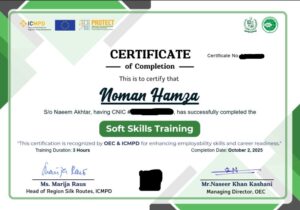
**Beyond the Diploma: Unlocking Global Opportunities with an OEC-Recognized Soft Skills Certificate in Pakistan**
In the dynamic and fiercely competitive arena of global employment, a university degree or technical certification is your ticket to the game—but it is no longer your winning hand. For the modern Pakistani professional eyeing opportunities abroad, a new currency of competence has emerged, one that transcends technical know-how and speaks the universal language of workplace excellence: soft skills.
Recognizing this paradigm shift, Pakistan’s premier authority for overseas employment, the Overseas Employment Corporation (OEC), has placed a significant emphasis on these competencies. An OEC-recognized Soft Skills Certificate is not merely another document to add to your file; it is a powerful testament to your readiness to thrive in an international, multicultural professional environment. This guide illuminates the path to acquiring this crucial credential, transforming your professional profile from qualified to exceptional.
The OEC: Your Gateway to the World
Before delving into the nuances of Soft Skill Certificate, it is essential to understand the role of the OEC. Established to promote, regulate, and facilitate the ethical and organized emigration of Pakistani workforce, the OEC is the nation’s vanguard for overseas employment. It acts as a bridge, connecting skilled Pakistani professionals with reputable international employers while ensuring their rights and welfare are protected.
The OEC’s endorsement is a mark of credibility. When they recognize a certification, it signals to global employers that the holder has been vetted and prepared to not only perform a job but to excel within a team, adapt to new cultures, and represent Pakistan with professionalism and integrity.
Why Soft Skills? The Indispensable Differentiator
Imagine two engineers with identical technical qualifications applying for the same position in Saudi Arabia. One possesses an impeccable academic record. The other has the same record, plus a certified proficiency in communication, teamwork, and cross-cultural etiquette. The choice for the employer is unequivocal.
Soft skills are the cluster of personal attributes, personality traits, and behaviors that determine how you interact with others, manage your work, and navigate challenges. In a global context, they are non-negotiable. They include:
- Effective Communication: The ability to articulate ideas clearly, listen actively, and engage respectfully with colleagues from diverse linguistic and cultural backgrounds.
- Teamwork & Collaboration: Moving beyond individual contribution to synergize with a team, often comprising multiple nationalities, to achieve common goals.
- Adaptability & Resilience: Thriving in new environments, embracing change, and recovering from setbacks—a critical skill for any expatriate.
- Problem-Solving & Critical Thinking: Approaching challenges logically and creatively, rather than simply executing instructions.
- Professional Etiquette & Intercultural Competence: Understanding and respecting workplace norms, hierarchies, and cultural sensitivities, which vary dramatically from Pakistan to the UAE, Malaysia, or Germany.
- Time Management & Discipline: Demonstrating reliability, meeting deadlines, and managing workloads autonomously.
An OEC soft skills certificate validates your prowess in these areas, providing tangible proof that you are a well-rounded, adaptable, and valuable asset.
Soft Skill Certificate Government of Pakistan for Overseas Jobs
The Certification Odyssey: Pathways to Accreditation
Acquiring an OEC-recognized soft skills certificate involves a purposeful journey. Here’s how to navigate it:
1. Identify OEC-Approved Training Providers:
Your first step is to identify institutes and programs officially recognized by the OEC. This information is typically available on the OEC’s official website (www.oec.gov.pk) or can be obtained by contacting their offices directly. Opting for an approved provider ensures your certificate will be held in high esteem by both the OEC and prospective overseas employers.
2. Curriculum Scrutiny:
Do not enroll blindly. Examine the curriculum of the prospective course. A robust program should offer a balanced mix of theoretical knowledge and practical, immersive exercises. Look for modules on:
- Business Communication (verbal, non-verbal, and written)
- Leadership and Team Dynamics
- Cross-Cultural Negotiation and Management
- Emotional Intelligence and Workplace Ethics
- Digital Literacy and Remote Collaboration Tools
3. The Learning Modalities:
Providers offer various formats to suit different needs:
- In-Person Workshops: Ideal for immersive, interactive learning and immediate feedback.
- Online Certifications: Offer flexibility for working professionals or those in remote locations.
- Blended Learning: A hybrid model that combines the convenience of online theory with the power of in-person practical sessions.
4. Assessment and Certification:
True learning is validated through assessment. Reputable programs culminate in evaluations that test your application of skills, not just your memory. This may involve role-playing scenarios, group projects, presentations, and written examinations. Upon successful completion, you will be awarded the certificate, which should clearly bear the name of the institute and its recognition status.
Weaving the Certificate into Your Professional Tapestry
Possessing the certificate is one thing; leveraging it effectively is another.
- On Your CV/Résumé: Don’t bury it under “Other Certificates.” Create a dedicated “Professional Skills” or “Core Competencies” section at the top. List your soft skills prominently and mention the OEC-recognized certification to give them weight.
- In Interviews: Be prepared with specific anecdotes. When asked, “Tell me about a time you faced a challenge,” use a story that highlights your problem-solving, communication, or adaptability skills, and mention your formal training as the foundation of your approach.
- OEC Documentation: Include a copy of this certificate in all your applications and profiles submitted through the OEC. It completes your portfolio, presenting you as a comprehensively prepared candidate.
The Quintessential Return on Investment
The investment of time and resources in obtaining this certification pays multifaceted dividends:
- Enhanced Employability: You immediately stand out in a crowded field of applicants who only have technical qualifications.
- Higher Earning Potential: Employees with proven soft skills are often considered for higher-level positions and leadership roles, which command better salaries.
- Successful Integration: The certificate equips you with the tools to integrate smoothly into your new workplace and community abroad, reducing culture shock and fostering a more positive, productive experience.
- Long-Term Career Capital: These skills are transferable and timeless. They will benefit you throughout your career, regardless of where in the world you work.
Conclusion: Forging a Global Professional Identity
In the final analysis, an OEC-recognized Soft Skills Certificate is more than a prerequisite; it is a strategic career accelerator. It represents a conscious investment in yourself—a commitment to developing the human skills that technology cannot replicate. For the ambitious Pakistani professional, it is the key that unlocks not just a job abroad, but a truly successful and fulfilling international career. It signals that you are not just ready to work, but you are ready to contribute, lead, and excel on the world stage.
Begin your journey today. Identify a program, enroll, and embark on the transformative process of equipping yourself with the skills that define the global professional of tomorrow.
Jobs in Pakistan Where a Soft Skills Certificate is Highly Beneficial
The following table categorizes jobs where soft skills are not just a bonus but a core requirement for success.
| Job Category | Specific Job Roles | Why Soft Skills are Critical |
|---|---|---|
| Sales & Marketing | Sales Executive, Business Development Representative, Marketing Manager, Key Account Manager, Brand Executive | Essential for building client relationships, negotiating deals, persuading customers, and presenting ideas convincingly. Communication, empathy, and resilience are key. |
| Customer Support & Success | Customer Service Representative, Call Center Agent, Client Success Manager, Support Specialist | Crucial for handling customer queries, resolving complaints with patience, showing empathy, and maintaining a positive company image. |
| Human Resources (HR) | HR Generalist, Recruiter, Talent Acquisition Specialist, Learning & Development Officer | Central to interviewing candidates, resolving employee conflicts, conducting trainings, and communicating company policies effectively and sensitively. |
| Management & Leadership | Team Lead, Project Manager, Operations Manager, Branch Manager | Needed to motivate teams, delegate tasks, provide constructive feedback, manage conflicts, and drive projects to completion. |
| Banking & Finance | Relationship Manager, Bank Teller, Financial Advisor, Credit Analyst | Important for building trust with clients, explaining complex financial products simply, and working ethically with sensitive information. |
| Teaching & Education | School Teacher, University Lecturer, Corporate Trainer, Education Counselor | Fundamental for explaining concepts clearly, managing classrooms, inspiring students, and communicating with parents and administration. |
| Media & Communications | Content Writer, Journalist, Public Relations (PR) Officer, Social Media Manager | Key to crafting compelling messages, interviewing subjects, working with teams under deadlines, and managing a brand’s public perception. |
| Information Technology (IT) | IT Project Manager, Business Analyst, Software Developer (in client-facing roles), IT Support | Vital for understanding client needs, working in agile teams, explaining technical issues to non-technical stakeholders, and managing project timelines. |
| Administration & Secretarial | Executive Assistant, Office Administrator, Personal Assistant | Critical for managing schedules, communicating on behalf of executives, coordinating between departments, and problem-solving daily office issues. |
How to Verify a Certificate’s Authenticity
A major advantage of a government-issued certificate is its verifiability.
- NAVTTC certificates often have a QR code or a unique code.
- You can verify the authenticity of the certificate and the accreditation of the training institute on the NAVTTC website.
Why is this Certificate Important?
- Credibility: A government-certified credential adds significant weight to your job application.
- Skill Validation: It officially validates that you possess the necessary non-technical skills to be a valuable employee.
- Visa and Emigration Process: For many countries, especially in the Middle East, evidence of formal training (including soft skills) can streamline the visa and employment approval process.
- Competitive Edge: It distinguishes you from other candidates who may only have technical qualifications.
Steps to Take Now:
- Identify Your Target Country and Job: The required soft skills can vary (e.g., Japanese workplace etiquette vs. Saudi Arabian).
- Research: Go to the NAVTTC website and find their list of affiliated institutes.
- Contact Institutes: Call or visit institutes like Punjab TEVTA, SSTC (Saudi Swedish Technical Institute), or other reputable centers in your area.
- Inquire: Ask specifically for courses tailored for “Overseas Employment” that include a certified soft skills module.
By obtaining a Government of Pakistan-certified soft skills certificate, you are taking a proactive and official step toward achieving your goal of working abroad. Good luck
Skill Certificate Related Queries:
soft skill certificate, pak soft skill certificate, oec soft skill certificate, how to get soft skill certificate in Pakistan,
pak soft skill certificate online, how to make soft skill certificate, pk soft skill certificate, pak soft skill certificate download,
oec soft skill certificate verification online, park soft skill certificate, soft skill certificate Pakistan, soft skill certificate app,
soft skill certificate answers, soft skill certificate apply, soft skill certificate app download, soft skill certificate application
soft skill certificate apply online, soft skill certificate add, soft skill certificate apk free download, what is soft skills assessment, what are soft skills courses, apply for soft skill certificate, soft skill certificate for Saudi Arabia, soft skills courses list, soft skill certificate quiz answers, soft skill certificate questions and answers, soft skill certificate online apply
soft skill certificate Pakistan app, soft skill certificate banane ka tarika, soft skill certificate benefits.
II
soft skills classes, soft skills categories, soft skills certification free, soft skills certifications, check soft skill certificate
soft skills course syllabus, soft skill certificates, soft skill certificate create online, soft skill character certificate,
soft skill certificate check online, soft skill certificate course, soft skill certificate check, soft skill certificate duration
soft skill certificate contact number, soft skill certificate check online near Islamabad, soft skill certificate charges,
soft skill certificate check online near Lahore, soft skill certificate com, soft skill certificate create,
check soft skill certificate online, www soft skill certificate gov com, soft skill certificate download, soft skill certificate download skill certificate name change online, soft skill certificate date extended, soft skill certificate documents required,
soft skills certificate download Pakistan, soft skill development certificate, soft skill oec certificate download, soft certificate,
soft skill certificate last date, download soft skill certificate, soft skill certificate Pakistan download,
soft skills certification exam, soft skills certificate for overseas employment