
The call of the open sea has always been a powerful one—a siren song of adventure, challenge, and unparalleled opportunity. For those in Pakistan looking for a career that breaks the mold of a conventional 9-to-5 office job, one path stands out: the Pakistan Merchant Navy Job. It’s a profession that offers not just a job, but a lifestyle, combining technical expertise, global travel, and financial rewards that are hard to match on land.
But what exactly is the Merchant Navy, and how does one embark on this unique journey from Pakistan? This guide will serve as your compass, pointing you toward the courses, challenges, and immense rewards of a life at sea.
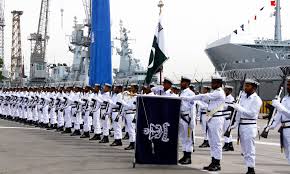
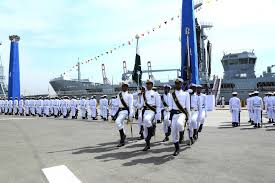
Merchant Navy vs. Pakistan Navy: Understanding the Key Difference
First, it’s crucial to clarify a common point of confusion. The Pakistan Navy is the country’s military maritime warfare branch. It is a defense force, focused on national security.
The Merchant Navy, on the other hand, refers to the commercial fleet of cargo ships that transport goods across the globe. It is the backbone of international trade, responsible for moving over 90% of the world’s cargo—from the oil that powers our cities and the grain that feeds nations to the consumer goods we use every day. A career in the Merchant Navy is a civilian career in the global shipping industry.
The Hierarchy on Board: Charting Your Career Course
Life on a merchant ship operates on a clear hierarchical structure, divided into three main departments. Your entry point and career progression depend on your qualifications and interests.
1. Deck Department: The Navigators & Managers
This team is responsible for the safe navigation and overall operation of the vessel.
- Entry Level: Deck Cadet (Trainee Navigator/Officer)
- Career Path: Cadet → Third Officer → Second Officer → Chief Officer (First Mate) → Captain (Master). The Captain is the ultimate authority on the ship.
2. Engine Department: The Heartbeat of the Ship
These are the marine engineers who ensure the propulsion system, electrical power, and all mechanical equipment run smoothly 24/7.
- Entry Level: Engine Cadet (Trainee Engineer)
- Career Path: Cadet → Fourth Engineer → Third Engineer → Second Engineer → Chief Engineer. The Chief Engineer is the head of the technical department.
3. Catering Department: The Home Makers at Sea
This team manages all hospitality services, ensuring the crew is well-fed and cared for during long voyages.
- Positions: Cook, Chief Cook, Steward.
For most aspiring officers, the goal is to enter as a cadet in the Deck or Engine departments.
The Pathway to Your Sea Legs: Education and Certification in Pakistan
To become a certified officer, you must undergo structured education and training. The process is regulated internationally by the International Maritime Organization (IMO) through standards like the Standards of Training, Certification and Watchkeeping (STCW). In Pakistan, several esteemed institutions offer the necessary programs.
Key Institutions:
- Pakistan Marine Academy (PMA), Karachi: The premier institution, often called the “Oxbridge of the Merchant Navy” in Pakistan. It offers a comprehensive 2-year pre-sea training program for Deck and Engine cadets, leading to a diploma and the necessary certificates to start as an officer cadet.
- Institute of Maritime Studies (IMS), Karachi: Affiliated with Bahria University, IMS offers undergraduate degrees (BSc in Nautical Studies and BEng in Marine Engineering) alongside the mandatory pre-sea training.
- Other Recognized Institutes: Several other technical training institutes and private colleges across Karachi and other port cities offer STCW-compliant courses for ratings (non-officer positions) and specific catering roles.
The Academic Journey:
- Eligibility: Typically, requires F.Sc. (Pre-Engineering) with Physics and Mathematics for Deck and Engine routes. High grades, particularly in math and physics, and a strong command of English are essential.
- Pre-Sea Training: This intensive residential course covers theoretical knowledge, practical skills, safety training (firefighting, sea survival, first aid), and simulator-based training.
- Sea Time: After pre-sea training, you sign onto a ship as a cadet for approximately 12-18 months of paid on-the-job training. This is where you apply your knowledge and learn from experienced officers.
- Certification Exams: Upon completing your sea time, you return to an institute to prepare for the competency exams administered by the Merchant Navy Directorate of the Government of Pakistan. Passing these exams earns you your Officer of the Watch (OOW) certificate, making you a licensed Third Officer or Fourth Engineer.
The Life: A Unique Blend of Challenge and Reward
The Advantages:
- Financial Prosperity: This is a major draw. Officers earn tax-free salaries in US dollars. A fresh cadet can start with a respectable stipend, and a licensed Junior Officer’s salary can be several times higher than most land-based graduate jobs. Senior Captains and Chief Engineers are among the highest-paid professionals in the country.
- Global Travel: You will see the world, docking at historic ports and experiencing diverse cultures firsthand.
- No Living Expenses: While on contract (typically 4-6 months), your accommodation, food, and medical care are fully provided. This allows for significant savings.
- Rapid Career Progression: The industry values competence and certification. With dedication, you can climb the ranks quickly.
- Long Leave Periods: After a contract at sea, you get an equal or longer period of paid leave, allowing for extensive time with family.
The Challenges:
- Being Away from Home: This is the biggest sacrifice. You will miss birthdays, holidays, and family events. Strong personal relationships require understanding and resilience.
- Demanding Work: It’s a 24/7 job. Watchkeeping, emergencies, and tight schedules can be physically and mentally taxing.
- Isolation: Despite being part of a crew, long voyages can feel isolating, especially away from internet connectivity (though this is improving on modern ships).
Is the Merchant Navy for You?
This career is ideal if you:
- Have a strong academic background in math and physics.
- Are adventurous, disciplined, and resilient.
- Can work seamlessly in a multicultural team.
- Can handle responsibility and problem-solving under pressure.
- Value financial independence and are willing to work hard for it.
It might not be the right fit if you:
- Prioritize being home every evening or require a stable daily routine.
- Struggle with adaptability or long periods away from loved ones.
Recruitment for 2026 positions is primarily done through maritime academies and training institutes. The process for 2026 has already begun for cadet-level positions.
Here are the detailed job aspects:
1. Types of Jobs / Ranks
Jobs in the merchant navy are divided into two main departments:
A. Deck Department:
- Carpool → 3rd Officer → 2nd Officer → Chief Officer → Captain/Master
- Responsibilities: Navigation, cargo operations, ship safety, communication, and overall management of the vessel.
B. Engine Department:
- First Cadet → 4rth Engineer → 3rd Engineer → 2nd Engineer → Chief Engineer
- Responsibilities: Operation, maintenance, and repair of all machinery on board, including the main engine, generators, pumps, and electrical systems.
C. Support Department (Ratings):
- Deck Ratings: Able Seaman (AB), Ordinary Seaman (OS) – Assist the deck officers.
- Engine Ratings: Fitter, Oiler, Wiper – Assist the engine officers.
- Stewards/Cooks: Catering and hospitality for the crew.
2. Eligibility Criteria (For Officer Cadet Positions – 2026 Intake)
This is the most common entry point for a long-term career.
- Nationality: Pakistani or AJK National.
- Age Limit: Typically 16 to 20 years on the date of commencement of training (varies slightly by academy).
- Academic Qualifications:
- For Deck Cadets: F.Sc. (Pre-Engineering) with minimum 60% marks. Physics and Mathematics are mandatory.
- For Engine Cadets: F.Sc. (Pre-Engineering) with minimum 60% marks. Physics and Mathematics are mandatory.
- For Dual License (Deck & Engine): F.Sc. (Pre-Engineering) with high marks (often 70%+).
- Medical Fitness: Must be medically fit with 6/6 eyesight (can be corrected with glasses). Color blindness is a disqualification. A rigorous medical exam from a PNS Shifa or other approved facility is required.
- Initial Tests: Candidates must pass:
- PSP/ISSB Test: A preliminary test and subsequent Inter Services Selection Board (ISSB) evaluation are standard for government-sponsored seats.
- Academy Entrance Test: Each academy conducts its own written test (Physics, Math, English, IQ).
- Interview: A final interview by a selection committee.
3. Key Recruitment & Training Institutions
Your application will be to one of these academies:
- Pakistan Marine Academy (PMA), Karachi: The premier federal government institution. Admission ads through national newspapers and website (https://dgte.navy.gov.pk).
- Bahria University (Maritime Campus), Karachi: A renowned private sector university offering maritime degrees.
- Karachi Institute of Economics & Technology (KIET), Karachi.
- Other Private Academies: Such as the National Maritime Academy (NMA) and others approved by the Pakistan Maritime Security Agency (PMSA).
4. Application Process for 2026
The process for the 2026 batch typically follows this timeline:
- Advertisement (Mid-2024): In major newspapers (Dawn, Jung, The News) 2026.
- Apply Online: Application Should be submitted through DGT&E portal.
- Initial Test: Shortlist candidates are informed for a written test.
- ISSSB: Successful candidates from the test undergo ISSB.
- Medical Exam: Passing ISSB leads to a detailed medical examination.
- Final List: A final list is based on Inter/F.s.c marks, test scores, and ISSB performance.
- Joining Academy (Early 2026): Selected cadets join the academy for a 2-year pre-sea training program.
5. Salary & Benefits
Salaries are tax-free and in US Dollars for officers working on foreign flag vessels.
- Cadet (During Training): A stipend is provided.
- Third Officer / Fourth Engineer: Starting salary can range from $1,500 – $2,500+ per month.
- Chief Officer / Second Engineer: Can earn $7,000 – $10,000+ per month.
- Captain / Chief Engineer: Can earn $12,000 – $18,000+ per month.
- Benefits: Typically include paid leave, free food and accommodation on board, insurance, and retirement plans.
6. Prepare for 2026
- Focus on Academics: Maintain high grades in F.Sc., especially in Physics and Mathematics.
- Improve English: Strong command of the English language is crucial for communication and exams.
- Physical Fitness: Start a routine to ensure you are physically and medically fit.
- Stay Inform: website (https://dgte.navy.gov.pk) This is the official announcements.
- Newspapers: Regularly check the classified sections of major national newspapers.
Disclaimer: The information above is based on the standard process. Always refer to the official advertisement for the 2026 intake when it is released for the most accurate and up-to-date details regarding eligibility, dates, and the application procedure.
Setting Sail on Your Future
A career in the Pakistan Merchant Navy is more than a profession; it’s a calling. It demands dedication, but in return, it offers a world of experience, responsibility, and financial security that is truly unique. For the right individual, it represents a chance to not just build a career, but to build a legacy—navigating the vast oceans that connect our world and power our global economy.
If you hear the ocean’s call, start charting your course today. Research the institutes, strengthen your academics, and prepare for an adventure that will define your life.
Fair winds and following seas! Home

Related Queries:
job, job alert, jobs ,jobs in Faisalabad ,jobs in Pakistan, job portal, jobee, jobs bank, job description, jobs24, job corps, job application, job Punjab gov pk, job clerk, job search websites, job openings near me, job in Pakistan, jobs Sahiwal, jobs in Karachi, job scan, jobs in Lahore, jobzzpk, jobs in Islamabad, jobes24, jobs near me, jobs in Rawalpindi, jobs alert, jobs Punjab gov pk, jobs in Peshawar, job in Karachi, job guru online, job portal Punjab, job bazar, job in Lahore, job bank Canada, job in Islamabad, job bank Pakistan, job hunting
Read more: Pakistan Merchant Navy Job-2026